

Check out Ars’ choice of search term about 2/3 of the way down the page.
Hi-res here.

Channel 9 has just posted a recording of my intro talk at C++ and Beyond 2011 last month in Banff. Here’s the link: C++ and Beyond 2011: Why C++.
It’s a keynote-y talk, not a technical talk, but we felt it was important to address an important trend involving the language. The goal is to share a perspective and rationale for why of late there’s such a resurgence of interest in C++ — both across the industry, and within Microsoft.
Whether or not you agree with the perspective and rationale, I hope you enjoy it!
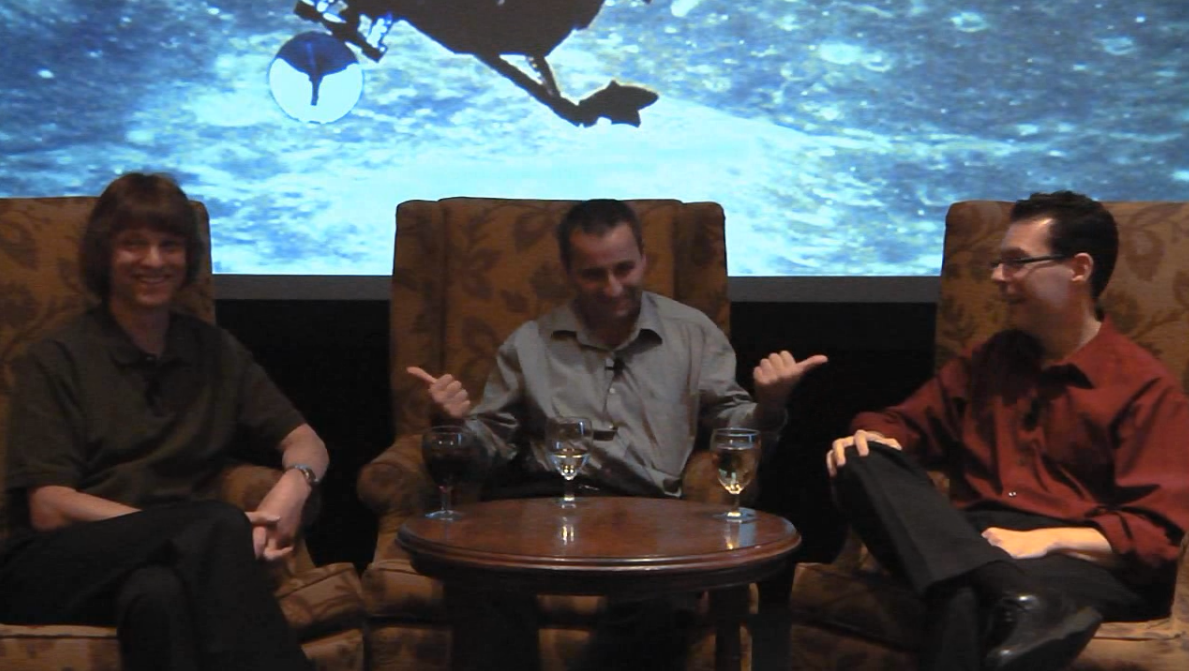
After the end of the C++ and Beyond event earlier this month, Charles Torre interviewed all three of us for Channel 9.
I thought it came out really well, and stayed firmly focused on C++ — including even during the parts we talked about D and other languages, where the focus was on how their best parts could be applied to C++.
Charles also taped more of the seminar, including the panels and my opening ‘keynote-y’ talk about the what’s and why’s of the C++ Renaissance. Some of those will also appear on C9 over time; I’ll blog about them as they go up.
Some highlights of this particular interview:
[00:00] Event debriefing
[01:38] Scott on C++ developers
[03:18] Modern C++
[04:17] Why D, Andrei? And what from D could and should be brought into C++?
[17:25] What problems does D solve that C++ can’t?
[22:03] C++ and D interoperability (COM is old, but COM is good)!
[24:22] C++11 and Beyond
[26:01] Herb, ISO C++ Committee’s next phase – what are you going to do? [note: see also more details in my trip report for the standards meeting held the following week]
[28:22] Scott, Andrei and Herb share perspectives on the ISO standards process, philosophies of language design, what C++ gets wrong, what it gets right
[49:48] Perspectives on this year’s event and if/when C++ and Beyond will happen again
The summer 2011 ISO C++ meeting was held on August 15-19 in Bloomington, Indiana, USA on the wonderful Indiana University campus. The minutes will be available at the 2011 papers page in a couple of weeks.
As previously announced, C++11 was unanimously approved just days before the standards meeting, so this was the first post-C++11 meeting. As planned, at this meeting we focused on processing some bug reports (defect reports, aka DRs) and have some initial discussion of the ‘what’s next’ variety. As expected, no decisions were made about whether we should consider new language extensions soon — that discussion will likely happen at our next meeting in February.
The big news out of last week’s meeting was on the standard library side: There was a clear decision that the library working group is ready to consider new library extensions, starting with the file system library proposal that was already accepted for post-C++11. The following announcement and instructions were read into the minutes:
The C++ committee Library Working Group welcomes proposals for library extensions which will be considered starting in the February 2012 meeting. We have not yet set out an overall timeline for future library extensions, but are ready to consider new proposals at this point.
To increase the chances of your proposal being accepted by the committee, we strongly recommend that a committee member willing to champion your proposal (this could be you yourself, or a delegate) attend upcoming meetings to help shepherd your proposal through the process.
It’s possible that this will take the form of a second library extensions technical report along the lines of the very successful Library Extensions Technical Report 1 (aka TR1). Whatever the form, it’s clear that the first order of business besides maintenance of the C++11 standard will be a new round of extensions to the C++ standard library.
Personally, I think that’s exactly what needed to happen at this meeting, and I’m very happy to see it take place. ASIO or thread pools, anyone? Maybe parallel algorithms, and concurrent containers? Stay tuned.
It’s our tradition to schedule one meeting a year outside the continental United States, and preferably outside North America, because this helps international participation by making it easier for people from all parts of the world to attend. Next year, as we’ve done before, this “un-American” meeting will be the Kona meeting, which is closer for folks in eastern Asia and Australia who may wish to attend.
Here are the planned dates and locations for upcoming ISO C++ standards committee meetings:
[Update: “C++11” is now the confirmed name — Geneva informs me that they plan to have it published in a matter of weeks, and then we’ll have ISO/IEC 14882:2011(E) Programming Languages — C++, Third Edition. The second edition was C++03, a Technical Corrigendum, or bug patch, that contained no new features. This is the first major revision with new features.]
The final ISO ballot on C++0x closed on Wednesday, and we just received the results: Unanimous approval.
The next revision of C++ that we’ve been calling “C++0x” is now an International Standard! Geneva will take several months to publish it, but we hope it will be published well within the year, and then we’ll be able to call it “C++11.”
I want to extend my thanks again to Bjarne Stroustrup for sharing his work with the world and continuing to help move it forward, and to all of the participants whose hard work went into achieving this important milestone in the history of a great language. Thanks!
 I’m happy to report there’s a new show on Channel 9 that focuses on native code development in C++. It’s called “Going Native”… iTunes podcast here, Twitter @C9GoingNative.
From the description:
C9::GoingNative is a show dedicated to native development with an emphasis on C++ and C++ developers. Each episode will have a segment including an interview with a native dev in his/her native habitat (office) where we’ll talk about what they do and how they use native code and associated toolchains, as well as get their insights and wisdom—geek out. There will be a small news component or segment, but the show will primarily focus on technical tips and conversations with active C/C++ coders, demonstrations of new core language features, libraries, compilers, toolchains, etc.
We will bring in guests from around the industry for conversations, tutorials, and demos. As we
progress, we will also have segments on other native languages (C, D, Go, etc…). It’s all native all the time.You, our viewers, fly first class. We’ll deliver what you want to see. That’s how it works.
Go native!
I just posted two more sessions I’ll be giving next month at C++ and Beyond. (Aside: If you’re interested in coming, register soon; there are now only 11 seats left.)
I’ve already posted these other sessions, which round out my solo talk slots (not counting panels where Scott and Andrei and I will also all participate):
In my keynote on Wednesday, I highlighted just the top two important features in the C++ AMP programming model. That afternoon, my coding colleague and demo demigod Daniel Moth gave a 45-minute session covering the entire C++ AMP programming model that walked through all the features with more examples. Daniel’s talk is now also online at Channel 9. I hope you enjoy it.
Note: The PDF slides link is small but important — the screen isn’t easy to see in the video itself.
Yesterday I had the privilege of talking about some of the work we’ve been doing to support massive parallelism on GPUs in the next version of Visual C++. The video of my talk announcing C++ AMP is now available on Channel 9. (Update: Here’s an alternate link; it seems to be posted twice.)
The first 20 minutes has nothing to do with C++ in particular or any platform in particular, but tries to make the case that the right way to view the “trends” of multicore computing, GPU computing, and cloud computing (HaaS) is that they are not three trends at all, but merely facets of the same single trend — heterogeneous parallel computing.
If they are, then one programming model should be able to address them all. We think we’ve found one.
The main reasons we decided to build a new model is that we believe there needs to be a single model that has all of the following attributes:
We’re really excited about this, and I hope you find the information in the talk to be useful. A prerelease implementation in Visual C++ that runs on Windows will be available later this year. More to come…
Just a reminder for those interested in using C++ to harness GPUs for fast code: My keynote at AMD Fusion Developer’s Conference will be webcast live. I’ll post another link when the recorded talk is available for on-demand viewing.
The talk starts at 8:30am U.S. Pacific time tomorrow (Wed June 15).
Today Jem Davies of ARM also gave a keynote. He’s a great speaker with a great message; look for it when it becomes available on demand. Recommended viewing whether or not you target ARM processors.
 Sutter’s Mill
