New U.S. executive order on cybersecurity

The Biden administration just issued another executive order (EO) on hardening U.S. cybersecurity. This is all great stuff. (*) (**)

A lot of this EO is repeating the same things I urged in my essay nearly a year ago, “C++ safety — in context”… here’s a cut-and-paste of my “Call(s) to action” conclusion section I published back then, and I think you’ll see a heavy overlap with this week’s new EO…

Call(s) to action

As an industry generally, we must make a major improvement in programming language memory safety — and we will.

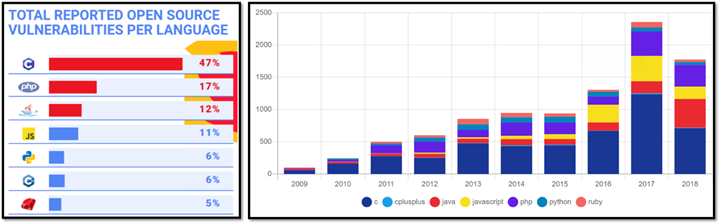
In C++ specifically, we should first target the four key safety categories that are our perennial empirical attack points (type, bounds, initialization, and lifetime safety), and drive vulnerabilities in these four areas down to the noise for new/updated C++ code — and we can.

But we must also recognize that programming language safety is not a silver bullet to achieve cybersecurity and software safety. It’s one battle (not even the biggest) in a long war: Whenever we harden one part of our systems and make that more expensive to attack, attackers always switch to the next slowest animal in the herd. Many of 2023’s worst data breaches did not involve malware, but were caused by inadequately stored credentials (e.g., Kubernetes Secrets on public GitHub repos), misconfigured servers (e.g., DarkBeamKid Security), lack of testing, supply chain vulnerabilities, social engineering, and other problems that are independent of programming languages. Apple’s white paper about 2023’s rise in cybercrime emphasizes improving the handling, not of program code, but of the data: “it’s imperative that organizations consider limiting the amount of personal data they store in readable format while making a greater effort to protect the sensitive consumer data that they do store [including by using] end-to-end [E2E] encryption.”

No matter what programming language we use, security hygiene is essential:

  • Do use your language’s static analyzers and sanitizers. Never pretend using static analyzers and sanitizers is unnecessary “because I’m using a safe language.” If you’re using C++, Go, or Rust, then use those languages’ supported analyzers and sanitizers. If you’re a manager, don’t allow your product to be shipped without using these tools. (Again: This doesn’t mean running all sanitizers all the time; some sanitizers conflict and so can’t be used at the same time, some are expensive and so should be used periodically, and some should be run only in testing and never in production including because their presence can create new security vulnerabilities.)
  • Do keep all your tools updated. Regular patching is not just for iOS and Windows, but also for your compilers, libraries, and IDEs.
  • Do secure your software supply chain. Do use package management for library dependencies. Do track a software bill of materials for your projects.
  • Don’t store secrets in code. (Or, for goodness’ sake, on GitHub!)
  • Do configure your servers correctly, especially public Internet-facing ones. (Turn authentication on! Change the default password!)
  • Do keep non-public data encrypted, both when at rest (on disk) and when in motion (ideally E2E… and oppose proposed legislation that tries to neuter E2E encryption with ‘backdoors only good guys will use’ because there’s no such thing).
  • Do keep investing long-term in keeping your threat modeling current, so that you can stay adaptive as your adversaries keep trying different attack methods.

We need to improve software security and software safety across the industry, especially by improving programming language safety in C and C++, and in C++ a 98% improvement in the four most common problem areas is achievable in the medium term. But if we focus on programming language safety alone, we may find ourselves fighting yesterday’s war and missing larger past and future security dangers that affect software written in any language.

Sadly, there are too many bad actors. For the foreseeable future, our software and data will continue to be under attack, written in any language and stored anywhere. But we can defend our programs and systems, and we will.


(*) My main disappointment is that some of the provisions have deadlines that are too far away. Specifically: Why would it take until 2030 to migrate to TLS 1.3? It’s not just more secure, it’s also faster and has been published for seven years already… maybe I’m just not aware enough of TLS 1.3 adoptability issues though, as I’m not a TLS expert.

(**) Here in the United States, we’ll have to see whether the incoming administration will continue this EO, or amend/replace/countermand it. In the United States, that’s a drawback of using an EO compared to passing an actual law with Congressional approval… an EO is “quick” because the President can issue it without getting legislative approval (for things that are in the Presidential remit), but for the same reason an EO also isn’t “durable” or guaranteed to outlive its administration. Because the next President can just order something different, an EO’s default shelf life is just 1-4 years.

So far, all the major U.S. cybersecurity EOs that could affect C++ have been issued since 2021, which means so far they have all come from one President… and so we’re all going to learn a lot this year, one way or another, about their permanence. (In both the U.S. and the E.U., actual laws are also in progress to shift software liability from consumer to software producers, and those will have real teeth. But here we’re talking about the U.S. EOs from 2021 to date.)

That said, what I see in these EOs is common sense pragmatism that’s forcing the software industry to eat our vegetables, so I’m cautiously optimistic that we’ll continue to maintain something like these EOs and build on them further as we continue to work hard to secure the infrastructure that our comfortable free lifestyle (and, possibly someday, our lives) depends on. This isn’t about whether we love a given programming language, it’s about how we can achieve the greatest hardening at the greatest possible scale for our civilization’s infrastructure, and for those of us whose remit includes the C++ language that means doing everything we can to harden as much of the existing C and C++ code out there as possible — all the programmers in the world can only write so much new/rewritten code every year, and for us in C++ by far the maximum contribution we can make to overall security issues related to programming languages (i.e., the subset of security issues that fall into our remit) is to find ways to improve existing C and C++ code with no manual source code changes — that won’t always be possible, but where it’s possible it will maximize our effectiveness in improving security at enormous scale. See also this 2-minute answer I gave in post-talk Q&A in Poland two months ago.

Speaking at University of Waterloo on January 15

Next week, on January 15, I’ll be speaking at the University of Waterloo, my alma mater. There’ll be a tech talk on key developments in C++ and why I think the language’s future over the next decade will be exciting, with lots of time allocated to a “fireside chat / interview” session for Q&A. The session is hosted by Waterloo’s Women in Computer Science (WiCS) group, and dinner and swag by Citadel Securities, where I work.

This talk is open to Waterloo students only (registration required). The organizers are arranging an option to watch remotely for the half of you who are away from campus on your co-op work terms right now — I vividly remember those! Co-op is a great experience.

I look forward to meeting many current students next week, and comparing notes about co-op work terms, pink ties (I still have mine) and MathSoc and C&D food (if Math is your faculty), WATSFIC, and “Waterloo” jokes (I realize doing this in January is tempting the weather/travel gods, but I do know how to drive in snow…).

My little New Year’s Week project (and maybe one for you?)

[Updates: Clarified that an intrusive discriminator would be far beyond what most people mean by “C++ ABI break.” Mentioned unique addresses and common initial sequences. Added “unknown” state for passing to opaque functions.]

Here is my little New Year’s Week project: Trying to write a small library to enable compiler support for automatic raw union member access checking.

The problem, and what’s needed

During 2024, I started thinking: What would it take to make C/C++ union accesses type-checked? Obviously, the ideal is to change naked union types to something safe.(*) But because it will take time and effort for the world to adopt any solution that requires making source code changes, I wondered how much of the safety we might be able to get, at what overhead cost, just by recompiling existing code in a way that instruments ordinary union objects?

Note: I describe this in my C++26 Profiles proposal, P3081R0 section 3.7. The following experiment is trying to validate/invalidate the hypothesis that this can be done efficiently enough to warrant including in an ISO C++ opt-in type safety profile. Also, I’m sure this has been tried before; if you know of a recent (last 10 years?) similar attempt that measured its results, please share it in the comments.

What do we need? Obviously, an extra discriminator field to track the currently active member of each C/C++ union object. But we can’t just add a discriminator field intrusively inside each C/C++ union object, because that would change the size and layout of the object and be a massive link/ABI incompatibility even with C compilers and C code on the same platform which would all need to be identically updated at the same time, and it would break most OSes whose link compatibility (existing apps, device drivers, …) rely on C ABIs and APIs and use unions in stable interfaces; breaking that is much more than people usually mean by “C++ taking an ABI break” which is more about evolving C++ standard library types.

So we have to store it… extrinsically? … as-if in a global internally-synchronized map<void* /*union obj address*/, uintNN_t /*discriminator*/>…? But that sounds stupid scary: global thread safety lions, data locality tigers, and even some branches bears, O my! Could such extrinsic storage and additional checking possibly be efficient enough?

My little experiment

I didn’t know, so earlier this year I wrote some code to find out, and this week I cleaned it up and it’s now posted here:

The workhorse is extrinsic_storage<Data>, a fast and scalable lock-free data structure to nonintrusively store additional Data for each pointer key. It’s wait-free for nearly all operations (not just lock-free!), and I’ve never written memory_order_relaxed this often in my life. It’s designed to be cache- and prefetcher-friendly, such as using SOA to store keys separately so that default hash buckets contain 4 contiguous cache lines of keys. Here I use it for union discriminators, but it’s a general tool that could be considered for any situation where a type needs to store additional data members but can’t store them internally.

If you’re looking for a little New Year’s experiment…

If you’re looking for a little project over the next few days to start off the year, may I suggest one of these:

  • Little Project Suggestion #1: Find a bug or improvement in my little lock-free data structure! I’d be happy to learn how to make it better, fire away! Extra points for showing how to fix the bug or make it run better, such as in a PR or your cloned repo.

  • Little Project Suggestion #2: Minimally extend a C++ compiler (Clang and GCC are open source) as described below, so that every construction/access/destruction of a union type injects a call to my little library’s union_registry<>:: functions which will automatically flag type-unsafe accesses. If you try this, please let me know in the comments what happens when you use the modified compiler on some real world source! I’m curious whether you find true positive union violations in the union-violations.log file – of course it will also contain false positives, because real code does sometimes use unions to do type punning on purpose, but you should be able to eliminate batches of those at a time by their similar text in the log file.

To make #2 easier, here’s a simple API I’ve provided as union_registry<>, which wraps the above in a compiler-intgration-targeted API. I’ll paste the comment documentation here:

//  For an object U of union type that
//  has a unique address, when              Inject a call to this (zero-based alternative #s)
//
//    U is created initialized                on_set_alternative(&U,0) = the first alternative# is active
//
//    U is created uninitialized              on_set_alternative(&U,invalid)
//
//    U.A = xxx (alt A is assigned to)        on_set_alternative(&U,#A)
//
//    U or U.A is passed to a function by     on_set_alternative(&U,unknown)
//      pointer/reference to non-const
//      and we don't know the function
//      is compiled in this mode
//
//    U.A (alt A is otherwise used)           on_get_alternative(&U,#A)
//      and A is not a common initial
//      sequence
//
//    U is destroyed / goes out of scope      on_destroy(&U)
//
//  That's it. Here's an example:
//    {
//      union Test { int a; double b; };
//      Test t = {42};                        union_registry<>::on_set_alternative(&u,0);
//      std::cout << t.a;                     union_registry<>::on_get_alternative(&u,0);
//      t.b = 3.14159;                        union_registry<>::on_set_alternative(&u,1);
//      std::cout << t.b;                     union_registry<>::on_get_alternative(&u,1);
//    }                                       union_registry<>::on_destroy(&u);
//
//  For all unions with up to 254 alternatives, use union_registry<>
//  For all unions with between 255 and 16k-2 alternatives, use union_registry<uint16_t>
//  If you find a union with >16k-2 alternatives, email me the story and use union_registry<uint32_t>

Rough initial microbenchmark performance

My test environment:

  • CPU: 2.60 GHz i9-13900H (14 physical cores, 20 logical cores)
  • OSes: Windows 11, running MSVC natively and GCC and Clang via Fedora in WSL2

My test harness provided here:

  • 14 test runs: Each successively uses { 1, 2, 4, 8, 16 32, 64, 1, 2, 4, 8, 16, 32, 64 } threads
    • Each run tests 1 million union objects, 10,000 at a time, 10 operations on each union; the test type is union Union { char alt0; int alt1; long double alt2; };
    • Each run injects 1 deliberate “type error” failure to trigger detection, which results in a line of text written to union-violations.log that records the bad union access including the source line that committed it (so there’s a little file I/O here too)
  • Totals:
    • 14 million union objects created/destroyed
    • 140 million union object accesses (10 per object, includes construct/set/get/destroy)

On my machine, here is total the run-time overhead (“total checked” time using this checking, minus “total raw” time using only ordinary raw union access), for a typical run of the whole 140M unit accesses:

Compiler total raw (ms) total checked (ms) total overhead (ms) Notes
MSVC 19.40 -O2 ~190 ~1020 ~830 Compared to -O2, -Ox checked was the same or very slightly slower, and -Os checked was 3x slower
GCC 14 -O3 ~170 ~800 ~630 Compared to -O3, -O2 overall was only slightly slower
Clang 18 -O3 ~170 ~510 ~340 Compared to -O3, -O2 checked was about 40% slower

Dividing that by 140 million accesses, the per-access overhead is:

Compiler total overhead (ns) / total accesses average overhead / access (ns)
MSVC 830M ns / 140M accesses 5.9 ns / access
GCC (midpoint) 630M ns / 140M accesses 4.5 ns / access
Clang 340M ns / 140M accesses 2.4 ns / access

Finally, recall we’re running on a 2.6 GHhz processor = 2.6 clock cycles per ns, so in CPU clock cycles the per-access overhead is:

Compiler average overhead / access (cycles)
MSVC 15 cycles / access
GCC 11.7 cycles / access
Clang 6.2 cycles / access

This… seems too good to be true. I may well be making a silly error (or several) but I’ll post anyway so we can all have fun correcting them! Maybe there’s a silly bug in my code, or I moved a decimal point, or I converted units wrong, but I invite everyone to have fun pointing out the flaw(s) in my New Year’s Day code and/or math – please fire away in the comments.

Elaborating on why this seems too good to be true: Recall that one “access” means to check the global hash table to create/find/destroy the union object’s discriminator tag (using std::atomics liberally) and then also set or check either the tag (if setting or using one of the union’s members) and/or the key (if constructing or destroying the union object). But even a single L2 cache access is usually around 10-14 cycles! This would mean this microbenchmark is hitting L1 cache almost always, even while iterating over 10,000 active unions at a time, often with more hot threads than there are physical or logical cores pounding on the same global data structure, and occasionally doing a little file I/O to report violations.

Even if I didn’t make any coding/calculation errors, one explanation is that this microbenchmark has great L1 cache locality because the program isn’t doing any other work, and in a real whole program it won’t get to run hot in L1 that often – that’s a valid possibility and concern, and that’s exactly why I’m suggesting Little Project #2, above, if anyone would like to give that little project a try.

In any event, thank you all for all your interest and support for C++ and its evolution and standardization, and I wish all of you and your families a happier and more peaceful 2025!


(*) Today we have std::variant which safely throws an exception if you access the wrong alternative, but variant isn’t as easy to use as union today, and not as type-safe in some ways. For example, the variant members are anonymous so you have to access them by index or by type; and every variant<int,string> in the program is also anonymous == the same type, so we can’t distinguish/overload unrelated variants that happen to have similar alternatives. I think the ideal answer – and it looks like ISO C++ is just 1-2 years from being powerful enough to do this! – will be something like the safe union metaclass using reflection that I’ve implemented in cppfront, which is as easy to use as union and as safe as variant – see my CppCon 2023 keynote starting at 39:16 for a 4-minute discussion of union vs. variant vs a safe union metafunction that uses reflection.

My code::dive talk video is available: New Q&A

Two weeks ago, Bjarne and I and lots of ISO committee members had a blast at the code::dive C++ conference held on November 25, just two days after the end of the Wrocław ISO C++ meeting. Thanks again to Nokia for hosting the ISO meeting, and for inviting us all to speak at their conference! My talk was an updated-and-shortened version of my CppCon keynote (which I also gave at Meeting C++; I’ll post a link to that video too once it’s posted):

If you already saw the CppCon talk, you can skip to these “new parts at the end” where the Q&A got into very interesting topics:

Finally, I’m glad I got a chance to give this last answer to cap things off, and thanks again for the audience question that led to it:

That morning, on our route while traveling from the hotel to the conference site, at one point we noticed that up ahead there was a long line of people all down the length of a block and wrapped around the corner. It took me a few beats to realize that was where we were going, and those were the people still waiting to get in to the conference (at that time there were already over 1,000 people inside the building). Here’s one photo that appeared in the local news showing part of the queue:

In all, I’m told 1,800 people attended on-site, and 8,000 attended online. Thank you again to our Nokia hosts for hosting the ISO C++ meeting and inviting us to code::dive, and thank you to all the C++ developers (and, I’m sure, a few C++-curious) who came from Poland and beyond to spend a day together talking about our favorite programming language!


(*) Here’s a transcript of what I said in that closing summary:

… Reflection and safety improvements as what I see are the two big drivers of our next decade of C++.

So I’m excited about C++. I really think that this was a turning point year, because we’ve been talking about safety for a decade, the Core Guidelines are a decade old, we’ve been talking about reflection for 20 years in the C++ committee — but this is the year that it’s starting to get real. This is the year we put erroneous behavior [in] and eliminated uninitialized locals in the standard, this is the year that we design-approved reflection for the standard — both for C++26 and hopefully they’ll both get in. We are starting to finally see these proposals land, and this is going to create a beautiful new decade, open up a new fresh era of C++. Bjarne [….] when C++11 came out, he said, you know, there’s been so many usability improvements here that C++11, even though it’s fully compatible with C++98, it feels like a new language. I think we’re about to do that again, and to make C++26 feel like a new language. And then just as we built on C++11 and finished it with C++14, 17, 20, the same thing with this generation. That’s how I view it. I’m very hopeful for a bright future for C++. Our language and our community continues to grow, and it’s great to see us addressing the problems we most need to address, so we have an answer for safety, we have an answer for simpler build systems and reducing the number of side languages to make C++ work in practice. And I’m looking forward to the ride for the next decade and more.

And at the end of the Q&A, the final part of my answer about why I’m focused on C++ rather than other efforts:

Why am I spending all this time in ISO C++? Not just because I’m some C++-lover on a fanatical level — you may accuse me of that too — but it’s just because I want to have an impact. I’m a user of this world’s society and civilization. I use this world’s banking system. I rely on this world’s hospital system. I rely on this world’s power grid. And darnit I don’t want that compromised, I want to harden it against attack. And if I put all my energy into some new programming language, I will have some impact, but it’s going to be much smaller because I can only write so much new code. If I can find a way to just recompile — that’s why you keep hearing me say that — to just recompile the billions of lines of C++ code that exist today, and make them even 10% safer, and I hope to make them much more than that safer, I will have had an outsized effect on securing our civilization. And I don’t mean to speak too grandiosely, but look at all the C++ code that needs fixing. If you can find a way to do that, it will have an outsized impact and benefit to society. And that’s why I think it’s important, because C++ is important — and not leaving all that code behind, helping that code too as well as new code, I think is super important, and that’s kind of my motivation.

A new chapter, and thoughts on a pivotal year for C++

Starting today I’m excited to be working on a new team, with my C++ standards and community roles unchanged. I also wanted to write a few words about why I’m excited about continuing to invest my time heavily in C++’s standardization and evolution especially now, because I think 2024 has been a pivotal year for C++ — and so this has turned into a bit of an early “year-end C++ retrospective” post too.

It’s been a blast to be on the Microsoft Visual C++ compiler team for over 22 years! The time has flown by because the people and the challenges have always been world-class. An underappreciated benefit of being on a team that owns a foundational technology (like a major C++ compiler) is that you often don’t have to change teams to find interesting projects, because new interesting projects need compiler support and so tend to come to you. That’s been a real privilege, and why I stuck around way longer than any other job I’ve held. Now I am finally going to switch to a new job, but I’ll continue to cheer my colleagues on as a happy MSVC user on my own projects, consuming all the cool things they’re going to do next!

Today I’m thrilled to start at Citadel Securities, a firm that “combines deep trading acumen with leading-edge analytics and technology to deliver liquidity to some of the world’s most important markets, retail brokerages, and financial institutions.” I’ve known folks at CitSec for many years now (including some who participate in WG 21) and have long known it to be a great organization with some of the brightest minds in engineering and beyond. Now I’m looking forward to helping to drive CitSec’s internal C++ training initiatives, advise on technical strategy, share things I’ve learned along the way about sound design for both usability and pragmatic adoptability, and mentor a new set of talented folks there to not only take their own skilled next steps but also to themselves become mentors to others in turn. I think a continuous growth and learning culture like I’ve seen at CitSec consistently for over a dozen years is one of the most important qualities a company can have, because if you have that you can always grow all the other things you need, including as demands evolve over time. But maybe most of all I’m looking forward to learning a lot myself as I dive back into the world of finance — finance is where I started my junior career in the 80s and 90s, and I’m sure I’ll learn a ton in CitSec’s diverse set of 21st-century businesses that encounter interesting, leading-edge technical challenges every day that go well beyond the ones I encountered back in the 20th.

My other C++ community roles are unchanged — I’m continuing my current term as chair of the ISO C++ committee, I’m continuing as chair of the Standard C++ Foundation, and especially I’m continuing to work heavily on ISO C++ evolution (I have eight papers in the current mailing for this month’s Wrocław meeting!) including supporting those with cppfront prototype implementations. I meant it when I said in my CppCon talk that C++’s next decade will be dominated by reflection and safety improvements, and that C++26 really is shaping up to be the most impactful release since C++11 that started a new era of C++; it’s an exciting time for C++ and I plan to keep spending a lot of time contributing to C++26 and beyond.

Drilling down a little: Why is 2024 a pivotal year for C++? Because for the first time in 2024 the ISO committee has started adopting (or is on track to soon adopt) serious safety and reflection improvements into the draft C++ standard, and that’s a big turning point:

  • For safety: With uninitialized local variables no longer being undefined behavior (UB) in C++26 as of March 2024, C++ is taking a first serious step to really removing safety-related UB, and achieve the ‘holy grail’ of an easy adoption story: “Just recompile your existing code with a C++26 compiler, with zero manual code changes, and it’s safer with less UB.” This month, I’m following up on that proposing P3436R1, a strategy for how we could remove all safety-related UB by default from C++ — something that I’m pretty sure a lot of folks can’t imagine C++ could ever do while still remaining true to what makes C++ be C++, but that in fact C++ has already been doing for years in constexpr code! The idea I’m proposing is to remove the same cases of UB we already do in constexpr code also at execution time, in one of two ways for each case: when it’s efficient enough, eliminate that case universally the same as we just did for uninitialized locals; otherwise, leverage the great ideas in the Profiles proposals as a way to opt in/out of that case (see P3436 for details). If the committee likes the idea enough to encourage me to go do more work to flesh it out, over the winter I’ll invest the time to expand the paper into a complete catalog of safety-related UB with a per-case proposal to eliminate that UB at execution time. If we can really achieve a future C++ where you can “just recompile your existing code with safety Profiles enabled, and it’s safer with zero safety-related UB,” that would be a huge step forward. (Of course, some Profiles rules will require code changes to get the full safety benefits; see the details in section 2 of my supporting Profiles paper.)
  • For reflection: Starting with P2996R7 whose language part was design-approved for C++26 in June 2024, we can lay a foundation to then build on with follow-on papers like P3294R2 and P3437R1 to add generation and more features. As I demonstrated with examples in the above-linked CppCon talk, reflection (including generation) will be a game-changer that I believe will dominate the next decade of C++ as we build it out in the standard and learn to use it in the global C++ community. I’m working with P2996/P3294 prototypes and my own cppfront compiler to help gather usability experience, and I’m contributing my papers like P0707R5 and P3437R1 as companion/supporting papers to those core proposals to try to help them progress.

As Bjarne Stroustrup famously said, “C++11 [felt] like a new language,” starting a new “modern” C++ style featuring auto and lambdas and standard safe smart pointers and range-for and move semantics and constexpr compile-time code, that we completed and built on over the next decade with C++14/17/20/23. (And don’t forget that C++11’s move semantics already delivered the ideal adoption story of “just recompile your existing code with a C++11 compiler, with zero manual code changes, and it’s faster.”) Since 2011 until now, “modern C++” has pretty much meant “C++ since C++11” because C++11 made that much of a difference in how C++ worked and felt.

Now I think C++26 is setting the stage to do that again for a second time: Our next major era of what “modern C++” will mean will be characterized by having safety by default and first-class support for reflection-based generative compile-time libraries. Needless to say, this is a group effort that is accomplished only by an amazing set of C++ pros from dozens of countries, including the authors of the above papers but also many hundreds of other experts who help design and review features. To all of those experts: Again, thank you! I’ll keep trying to contribute what I can too, to help ship C++26 with its “version 1” of a set of these major new foundational tools and to continue to add to that foundation further in the coming years as we all learn to use the new features to make our code safer and simpler.

C++ is critically important to our society, and is right now actively flourishing. C++ is essential not only at Citadel Securities itself, but throughout capital markets and the financial industry… and even that is itself just one of the critical sectors of our civilization that heavily depend on C++ code and will for the foreseeable future. I’m thrilled that CitSec’s leadership shares my view of that, and my same goals for continuing to evolve ISO C++ to make it better, especially when it comes to increasing safety and usability to harden our society’s key infrastructure (including our markets) and to make C++ even easier to use and more expressive. I’m excited to see what the coming decade of C++ brings… 2024 really has shaped up to be a pivotal year for C++ evolution, and I can’t wait to see where the ride takes us next.

My AMA yesterday is up on YouTube

Boy, Jens Weller turns these things around quickly! Thanks again, Jens, for having me on your Meeting C++ Live show.

I’ve put a list of the questions, with timestamped links, below…

All the questions and answers, with links

00:19 What are you up to with C++ currently / what keeps you excited?

04:04 Sean Baxter has finally written up a proposal to bring borrow checking to C++, to improve safety. What are your views on his proposal and what approach is Cpp2 planning?

08:48 Is there a long-term vision for C++? How can C++ maintain its relevance in the next 20 years?

13:14 What is your favorite C++ editor/IDE when not using Microsoft Visual Studio?

14:19 Will networking be in C++26?

17:43 Why is MSVC 2022 falling behind Clang and GCC on C++23 and C++26 features?

21:21 What is the roadmap for Cpp2? Whether it will be fit for production use?

26:30 Should the stdlib be split in two parts. One with slow changes and one with fast changes. E.g., ranges were introduced in C++20 but finished in C++23. I am still missing some features.

29:34 Are there plans to address ABIs with interfaces or other features in C++?

36:18 What is your answer to the growing complexity of C++ to be learned especially by novices? How would we teach C++ (e.g., at the university) if it gets larger and larger?

40:53 In the context of C++’s zero-cost abstractions philosophy, how do you see future proposals for making bounds checking in std::vector both safer and more efficient?

47:13 Are C++ safety initiatives arriving too late to fend off the growing adoption of Rust for “safe” low-level development?

55:25 What is the status of the profiles proposal in C++? Will some of it be part of C++26 or C++29?

57:35 The Common Package Specification, which looked very promising, seems stalled. Why is tooling in the language not a priority?

59:11 What do you think of std::execution / P2300R10? The API changed a lot across papers, and to me is quite a piece of work for library implementers to integrate.

1:04:35 Aren’t you afraid that reflection might be misused too much (e.g., use it for serialization)?

1:06:46 If local uninitialized variables are no longer UB, how will they behave? Could you please elaborate a bit on that?

1:11:30 How is the Contracts TS coming along? What are your thoughts on Contract Based Programming, in general?

1:15:56 Any chance of having type erasure (mainly std::any) in MSVC reimplemented not on top of RTTI? Unfortunately the current implementation makes it unusable in places where symbol names are left behind by RTTI.

1:17:38 What happened with the official publication of the C++23 standard?

1:22:31 Preview of my keynote next month at Meeting C++.